



















Smile More




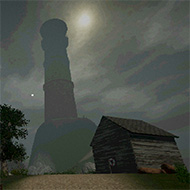
What is actually waiting for you once the first street corner loads in Smile More? That’s a fair question, since the opening screen gives you a single figure standing at the edge of an unfamiliar city and little else. No tutorial popup walks you through what to look for, so the first few minutes are spent learning how the cursor interacts with doorways and signs.
| Genre | Mystery / urban adventure |
| Perspective | Point-and-click exploration |
| Platform | Browser |
| Setting | An unnamed city environment |
The City Smile More Never Explains
Smile More leans on atmosphere rather than exposition early on. There’s no dialogue crawl establishing why the streets feel wrong, just static screens the player clicks through and interprets alone. Games built this way live or die on whether the silence reads as intentional dread or an unfinished idea.
What holds it together is two ideas rather than a checklist of mechanics. Environmental storytelling stands in for written explanation — a boarded window or an overturned cart implies something happened without a line of text confirming it. Ambient pacing does the rest, letting empty streets sit uncomfortably long before anything changes, which reads as unsettling or just slow depending on the player’s patience.
That ambiguity is worth naming honestly. An unnamed protagonist wandering a city with no map and no marked objective is a well-worn genre convention, and Smile More sits comfortably inside it.
What a Player Actually Learns By Clicking Around in Smile More
Point-and-click urban mysteries in this vein usually hand a player one loose objective and a couple of half-explained leads, and the appeal comes from piecing together a city’s history through what’s left lying around. Forum terms for this style get thrown around constantly: “pixel hunting” for the search for a clickable object buried in a busy scene, and “adventure logic” for puzzle-solving that only makes sense once you’ve already solved it.
Whether Smile More earns those comparisons is hard to say from the outside, since so much of what makes this style land depends on content that isn’t visible without playing deep into it. The setup — a lone figure, an unfamiliar city, no clear finish line — either rewards patient exploration or exposes how thin an idea was, and it’s fair to want proof before committing real time to finding out which.
The most useful habit is treating every screen as worth a second look before moving on, and that matters most once the second or third street opens up. Urban mystery games like this tend to bury their few real clues inside unremarkable scenery.
Smile More doesn’t hide what kind of game it’s trying to be — a quiet, unexplained walk through a city uninterested in holding your hand — even if it stays cagey about everything else. Judge it the way you’d judge any unnamed-protagonist mystery adventure: by whether the streets you click through eventually add up to something, not by how confidently the opening screen sells the premise.