













Out Here


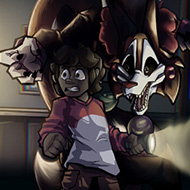

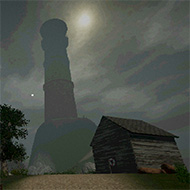
In Out Here you start alone at the top of a lighthouse with the light already dead, no memory of what happened to whoever kept this post before you, and no way to know yet that restoring the beam is only the first problem of the night. The radio is silent, the generator room dark. Everything you do for the first few minutes runs on the assumption that fixing the light is the whole task, and that assumption doesn’t survive long.
| Genre | Atmospheric Horror / First-Person Narrative |
| Perspective | First-person |
| Platform | Browser |
| Typical Playtime | 10 to 20 minutes per run |
| Visual Style | Retro low-poly, PSX-influenced |
A Generator That Refuses to Cooperate
The opening stretch of Out Here is quiet in a way that almost undersells what’s coming. You’re told the light has gone out, and before anything else happens you have to physically find the fuel that will get it running again — leaving the lamp room, moving through the lighthouse’s lower corridors, locating a fuel canister that isn’t sitting in an obvious spot. Nothing chases you during this stretch. Nothing needs to. The tension comes from not knowing what the rest of the night has planned, and from sound design doing just enough to make an empty hallway feel occupied even when it isn’t. Once you’ve got the canister, the generator sequence itself is short but deliberate — the last purely mechanical task before everything becomes about listening and reacting instead of doing.
The steps that make up this opening stretch generally play out in the same order every run:
- Explore the lighthouse’s interior to locate the missing fuel canister
- Return to the generator and refuel it to restore power
- Climb to the top of the lighthouse to reach the lamp room
- Activate the searchlight, which becomes your primary tool for the rest of the run
- Wait for the radio to crackle to life with the first contact of the night
The Radio Call That Changes Everything in Out Here
The moment the fisherman’s voice comes through the radio is the actual start of the game, even though you’ve already been playing for several minutes by then. He’s panicked, out on the water, insistent that something emerged from the water near his boat. From here the structure of Out Here shifts from exploration to something closer to a live-navigation puzzle — you’re responding in real time to a voice getting more frightened the longer the night goes on. He doesn’t give clean, game-friendly directions; he describes what he can see — shapes, landmarks, the general feel of the water — and it’s on you to translate that into something usable. Players expecting a straightforward escort are usually caught off guard by how much interpretation the dialogue demands. A quieter detail worth naming: the radio carries a layer of static that makes every line feel like it’s fighting to get through, part of why so many people mention the audio specifically.
Reading L-Shaped Islands and Cross-Shaped Rocks on the Map
Once contact is established, you pull up the map and cross-reference what the fisherman describes against the terrain. This is the mechanical heart of Out Here, unlike most horror games built on simple chases. You’re looking for landmarks like an L-shaped island, cross-shaped rocks, or a shipwreck outline, matching them against whatever vague, panicked description just came through. These features aren’t always where a quick glance suggests, and the game wants you to slow down before committing. A few things regularly trip players up here:
- Mistaking a similarly angled coastline for the specific L-shaped island being described
- Rushing a call before the fisherman finishes describing what he sees
- Forgetting that the map’s orientation doesn’t always match the direction you’re currently facing
- Treating every landmark as equally reliable, when some are easier to misread under pressure
Newcomers tend to treat this stage like a simple point-and-click puzzle and get punished for it. Regulars know to pause and study the shoreline shapes before committing.
Every Wrong Direction Ends the Same Way
Out Here doesn’t checkpoint your progress, and that single decision colors every choice once the radio conversation begins. Send the fisherman toward the wrong landmark and the consequences aren’t a health bar ticking down — his boat runs aground, gets stuck, or is pulled under, and the run is over. There’s no partial credit; you read the terrain right or you don’t. This no-checkpoint structure is debated among players — some find it appropriately unforgiving, others frustrating since restarting means watching the same opening minutes again rather than a do-over. Either way, once you’ve failed a run over a misread rock formation, you stop treating the map as decoration.
Why Out Here Doesn’t Give You a Clean Ending
Even when you make every call correctly, Out Here resists giving players a version of safety that feels complete. Multiple endings exist, and the throughline is that there isn’t really a version where everything is fine. The fisherman’s fate is never guaranteed even when you’ve done everything right, and that ambiguity is clearly intentional — it’s what players bring up when they talk about what stayed with them, an uncomfortable choice that makes Out Here feel like considered horror writing rather than a generic escort mission with a monster attached.
The Retro Look That Makes the Water Worse
The low-poly, PSX-influenced visual style isn’t just an aesthetic choice — it works against you in a game this reliant on reading terrain from a distance. Shapes on the water are already ambiguous by design, and the deliberately grainy rendering makes distinguishing a rock formation from open water just hard enough to keep you uneasy. Players have specifically praised how eerily pretty the exterior shots look, even while the presentation is engineered to make you doubt what you’re looking at. A cleaner rendering would likely read as less unsettling, since sharp clarity would undercut the dread Out Here is built around, and players consistently point to the water as the most unnerving visual element.
What Ten Minutes Can’t Undo
One thing almost everyone agrees on, even the people who love Out Here, is that it’s short. A full run lands around ten to twenty minutes depending on how quickly you navigate the generator sequence and how many attempts the radio section takes. For a lot of players that brevity is a genuine frustration — dread builds around the fisherman’s situation, then it’s over before that dread gets room to develop. Others see the short runtime as part of what makes it work, since horror that overstays its welcome loses its edge. It’s one of the more divisive aspects of the whole experience — most say they wanted more, but not necessarily because the game did anything wrong by staying short.
The Silence Before Something Answers
There’s a specific moment regulars bring up more than almost anything else: the stretch of dead air on the radio right after the fisherman goes quiet mid-sentence, before either his voice or something else comes back through. It’s not a jump scare, nothing happens on screen — it’s just silence held a beat longer than feels comfortable, and it does more to establish what’s actually out there than any direct depiction could. That’s the moment new players usually reference when asked what they remember, and it quietly answers a question a lot of people search before playing Out Here for the first time — whether there’s a clearly visible danger or whether the horror stays implied. The answer sits in between: you rarely see anything clearly, but you hear enough, and that’s worse.
Community discussion leans less on jump scares, since there aren’t many, and more on atmosphere. The phrase that comes up again and again is some version of dread over shock, which fits a game more interested in making you doubt a shape on the water than in throwing something at the camera.
Out Here isn’t a long game and isn’t trying to be one, but the stretch between the generator room and that last silence on the radio is dense enough that most players walk away remembering specific moments rather than a general impression. The cross-shaped rocks, the fisherman’s voice cutting out mid-sentence, the fuel canister almost missed on the first pass through the lighthouse — those are the details that stick, exactly the kind a game this short has no business making memorable.