












Arcadia Cafe



What happens when the ambient hum under Arcadia Cafe cuts out, and the room doesn’t fill that silence with anything at all? That gap — the beat right after a familiar sound stops — is where the game does its best work, using the cheapest tools horror has: bad lighting, a slow walk speed, and a camera that never shows the whole room.
| Genre | Psychological Horror / Exploration |
| Platform | Browser (HTML5) |
| Perspective | First-person |
| Visual Style | PSX-era low-poly |
The Low-Poly Dread Arcadia Cafe Leans On
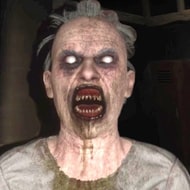
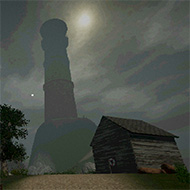
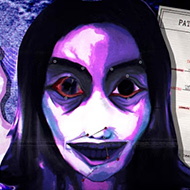
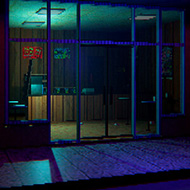
Chunky, vertex-wobbling models and a narrow draw distance are the whole visual language here, and Arcadia Cafe uses both the way most PS1-revival games do — not as a limitation to apologize for, but as a tool. Fog eats the far end of every room, so you’re never sure what’s past the counter until you’ve walked there.
Players who grew up on the original PS1 horror catalog recognize the texture-warping and slow turn speed at once; newer horror fans coming from cleaner titles need a minute to stop reading the jank as a bug rather than a choice.
It’s a short game, and it plays that way on purpose — no padding the floor plan into something sprawling. A handful of rooms, revisited under changing light, does more than a longer game spreading the same tension across a dozen areas.
Small Choices That Do a Lot of Work
Fixed light sources. Instead of a flashlight you aim, illumination comes from fixtures already in the room, so what you can and can’t see is dictated by the space, not your input.
Footstep audio. The sound design treats your footsteps as the loudest thing in the building, so any competing sound registers instantly, even a quiet one.
Static framing. Certain rooms lock the camera into a fixed angle rather than the usual pan, a nod to original PlayStation horror that regulars clock right away and newcomers just feel as sudden tension.
What Arcadia Cafe Leaves You to Figure Out
There’s no tutorial explaining what you’re supposed to do beyond moving through the cafe, and that’s deliberate — the game trusts walking speed, sound cues, and framing to teach the rules faster than text could. It runs entirely in a browser, and a full run rarely stretches past a single sitting, closer to fifteen minutes than a sprawling campaign.
Whether Arcadia Cafe counts as a full game or a mood piece is something players disagree about — the plot stays deliberately thin, and anyone expecting a resolved story leaves with more questions than answers. Controls stay close to standard movement rather than the tank-control scheme some PSX-horror purists prefer, itself a small point of debate in the genre.
None of that undercuts the goal. As a short, atmosphere-first exercise, it commits to lighting and sound over a jump-scare count, and that restraint is what this genre’s fans show up for.
Arcadia Cafe isn’t trying to be more than it is — a tight, low-poly haunted-space walk where the dining floor never quite feels empty, and the gap between sight and sound is why it sticks after the lights come back on.